Saturday 29th June sees an event to mark the 75th anniversary of a V1 Doodlebug landing on the Heaver Estate.There will be a walk around the estate (1pm), music and refreshments. The event is at Carnie Lodge, accessed from Manville Road SW17 8RF. Further details at the Eventbrite page here
J B Morton (“Beachcomber”), born in Tooting 1893 (Photo licensed from National Portrait Gallery)
“Beachcomber” was a long-running 20th Century newspaper columnist born in Tooting. Local resident Jesse Honey has written for us about his life and achievements.
John
Cameron Andrieu Bingham Michael Morton, better known as J B Morton, and even
better known by his pen-name of Beachcomber, was born at Park Lodge, Mitcham
Road, Tooting on 7th June 1893. The house where he was born, now
demolished, was on the site of what is now the Morley’s store on the corner of
Franciscan Road.
The
son of a journalist and drama critic, it must be admitted that Morton didn’t
stay long in Tooting. Though his father appears at Park Lodge in the 1891
Census, two years before J B’s birth, the family are no longer Tooting residents
by 1901 and seem never to have returned. The young John attended prep school in
Bromley and then went on to Harrow, which he hated and later satirised as
‘Narkover’. He fought in World War I, gradually drifting into journalism
afterwards. Ironically, he neither invented the name Beachcomber, nor was he the
first to use it. Rather, he took over the eponymous column in the Daily Express
from a colleague in 1924; the reason it is now Morton who is remembered as
Beachcomber is because he wrote under the name for another 51 years, only being
dropped in 1975.
Why
was Beachcomber so important and why does he deserve to be remembered? It’s
because his column was pioneering in terms of comedy and satire. He was among
the first to employ genuinely surreal humour, long before the Goons and Monty
Python. Spike Milligan named Morton as one of his heroes. He also influenced
Raymond Briggs, author of Fungus the Bogeyman and The Snowman, who chose Morton’s
complete works as his Desert Island Discs book. Evelyn Waugh, no mean humourist
himself, described Morton as having ‘the greatest comic fertility of any
Englishman’.
Beachcomber’s
satire was ground-breaking and daring. He was the first columnist to poke fun
at the very paper he was writing in (though this would be easy today, the Express
was at the time a far more serious paper). Morton’s taste for parodying press
pomposity was a major inspiration for Richard Ingrams when he helped set up
Private Eye, showing you can trace a direct link between Beachcomber and humour
of the present day.
Among
the recurring characters he invented in his column were Mister Justice
Cocklecarrot, Captain Foulenough and Doctor Jan van Strabismus of Utrecht. Famed
in Fleet Street as a practical joker, Morton used to speak loudly into pillar
boxes, pretending a friend was trapped inside- once a concerned crowd had
gathered, he quietly slipped away. He was also known for laughing uproariously and
dancing after finishing each paragraph he wrote, explaining this behaviour to startled
colleagues by asking ‘if I don’t find it funny, who will’?
After
marrying Mary O’Leary, an Irish doctor, in 1927, he moved out of London and,
after the Second World War, settled in Worthing, from where he continued to
post his column into London. He died in a nursing home there in 1979 and is
buried at Windlesham in Surrey.
Tooting Crater, Mars (Photo: Dr Peter Mouginis-Mark)
Janet Smith (Vice-Chair, Tooting History Group) has written for us about how Tooting has been put on the map again…on Mars.
Yes, it really
is! Tooting is not only in south London,
but also on Mars!
This is entirely
thanks to Dr Peter Mouginis-Mark, who grew up in Tooting in the Fifties and
Sixties and is now Professor of Geology at the University of Hawaii in
Honolulu.
His special
interest is the geology of the Red Planet and because of his analytical work on
a new meteorite crater, he was invited to give it a name. All suggestions have
to go before the International Astronomical Union and they gave the thumbs up to naming the crater after
Peter’s home town.
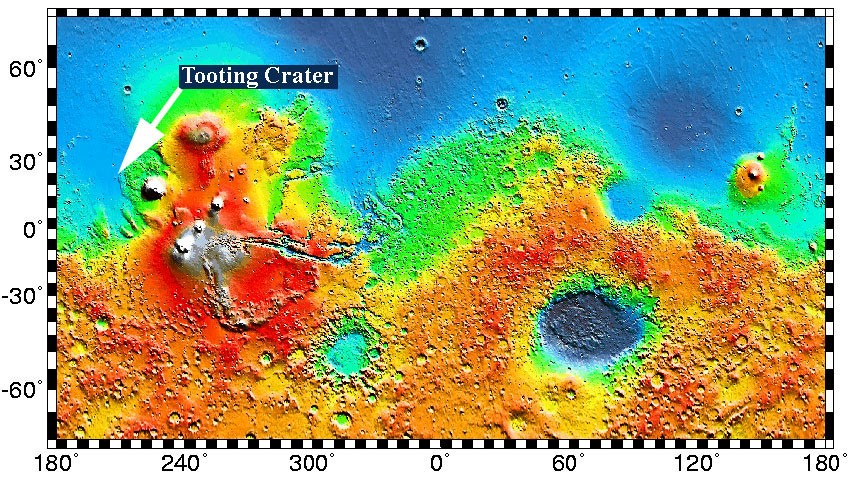
Map of Mars Surface Showing Tooting Crater (Photo: Dr Peter Mouginis-Mark)
Tooting Crater is about 28 km in diameter and is located to the west of the Olympus Mons volcano – thought to be the largest volcano on Mars. Peter estimates it was formed 3-5 million years ago making it one of the planet’s newest craters.
Dr Peter Mouginis-Mark on a trip to Tooting (July 2006)
Many thanks to
Peter’s brother David for alerting us to this wonderful story!
What are the buildings, objects, features that make Tooting important to you? What does being “locally listed” mean? What do you want to protect and improve in Tooting? Come to our June meeting and find out about local listing and Tooting History Group’s role in drawing it up.
The meeting is at our usual venue – The United Reformed Church in Rookstone Road – details here
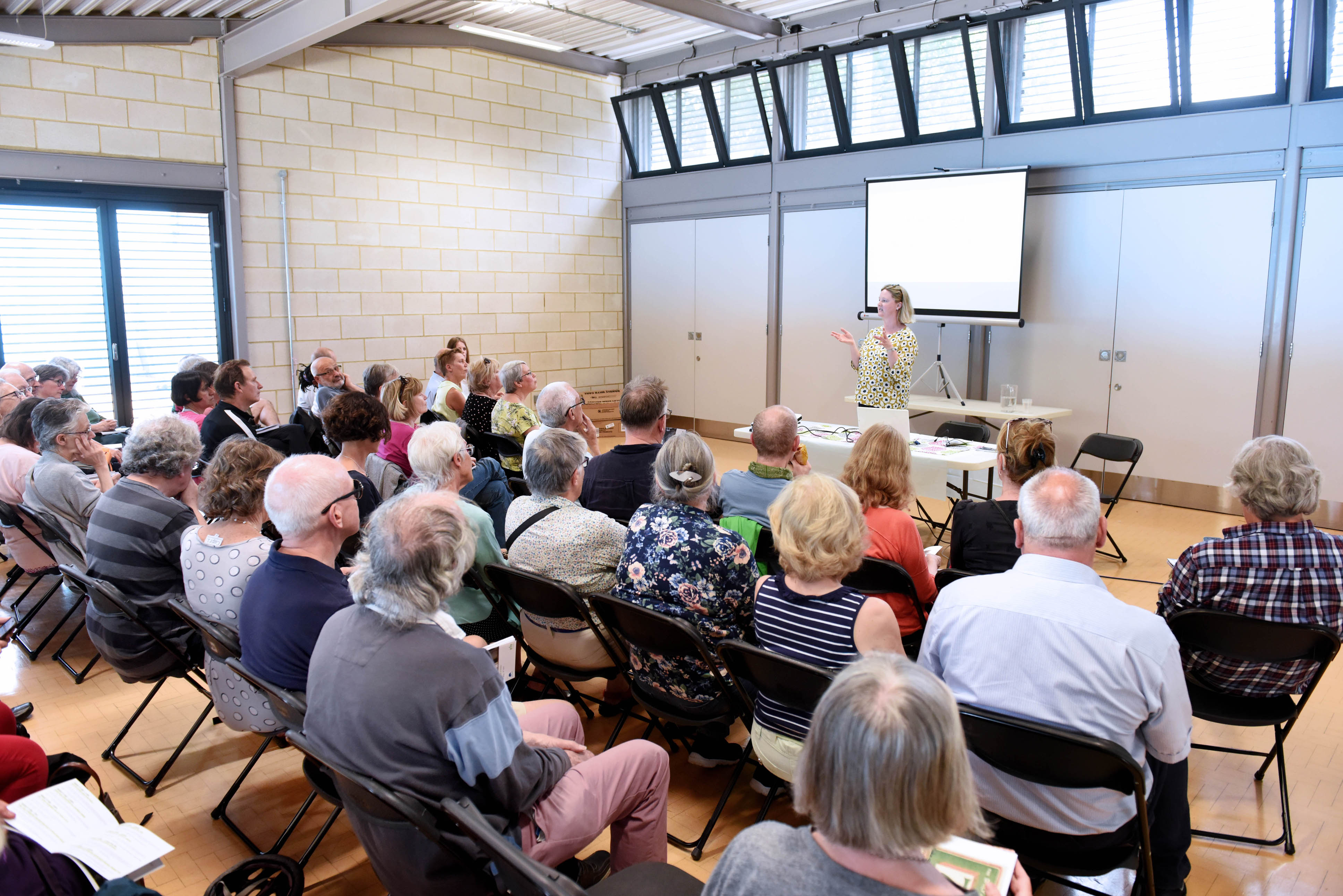
The newly published “Common Story” history of Tooting Commons was successfully launched on Saturday 25th May. Over 80 people crammed into the Pavillion building at Tooting Bec lido to hear presentations about the book and buy copies.
Katy Layton-Jones (historian) Speaks At Common Story Book Launch 25th May 2019
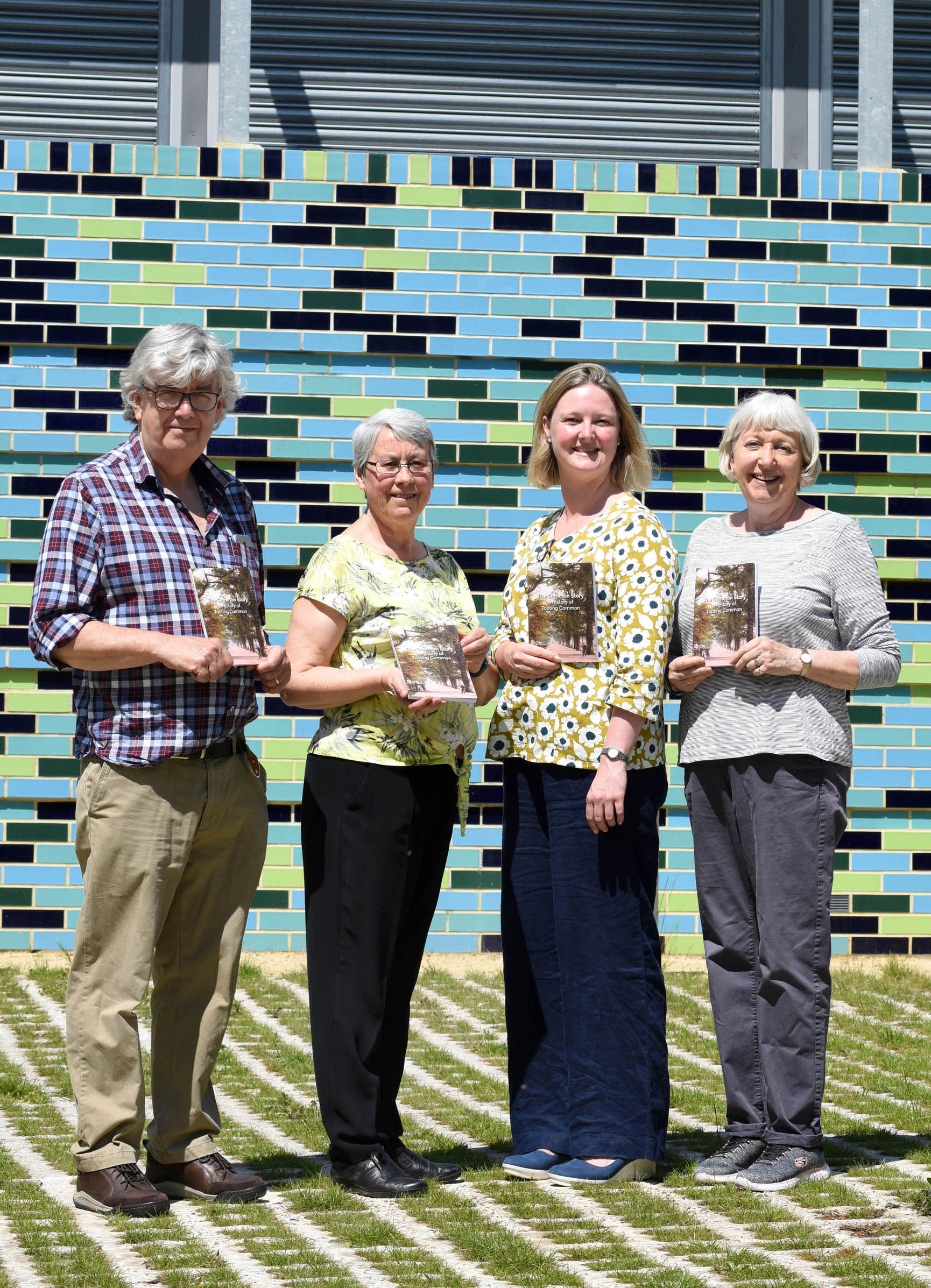
Philip Bradley,Janet Smith, Katy Layton-Jones And Cynthia Pullin With Copies of The Common Story
The book is the result of a four year Heritage Lottery funded project which has involved volunteer researchers, a professional historian, Enable and Wandsworth Council, together with other local history groups.
The Common Story is available in hard copy for £10 from The Tooting History Group. Alternatively, you can download a pdf copy (7 mb) by clicking the link below.
Philip Bradley, Chair of Tooting History Group said “We’re
very pleased to have been able to contribute to the Common Story History Of
Tooting Common. Tooting Graveney and Tooting Bec Commons are highly valued green
spaces for local people. We hope that the research undertaken by THG members
will add to everyone’s enjoyment of Tooting Common and give them a greater
understanding of how it has become the much-loved open space it is today.”
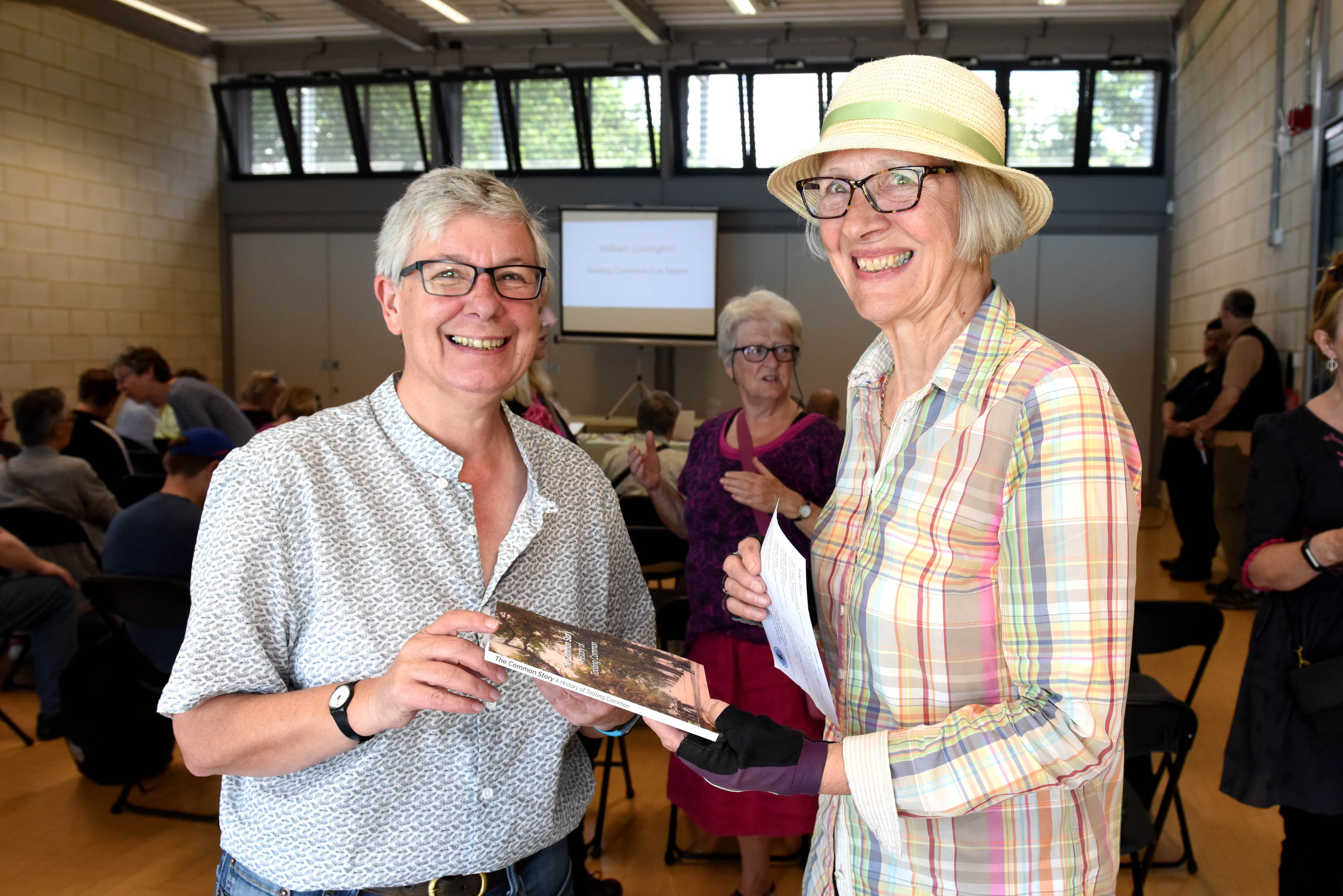
Tooting History Group Members Get A Free Copy Of The Common Story




 Tooting History Group